Sampo in the Kalevala and the folk songs
In the Kalevala
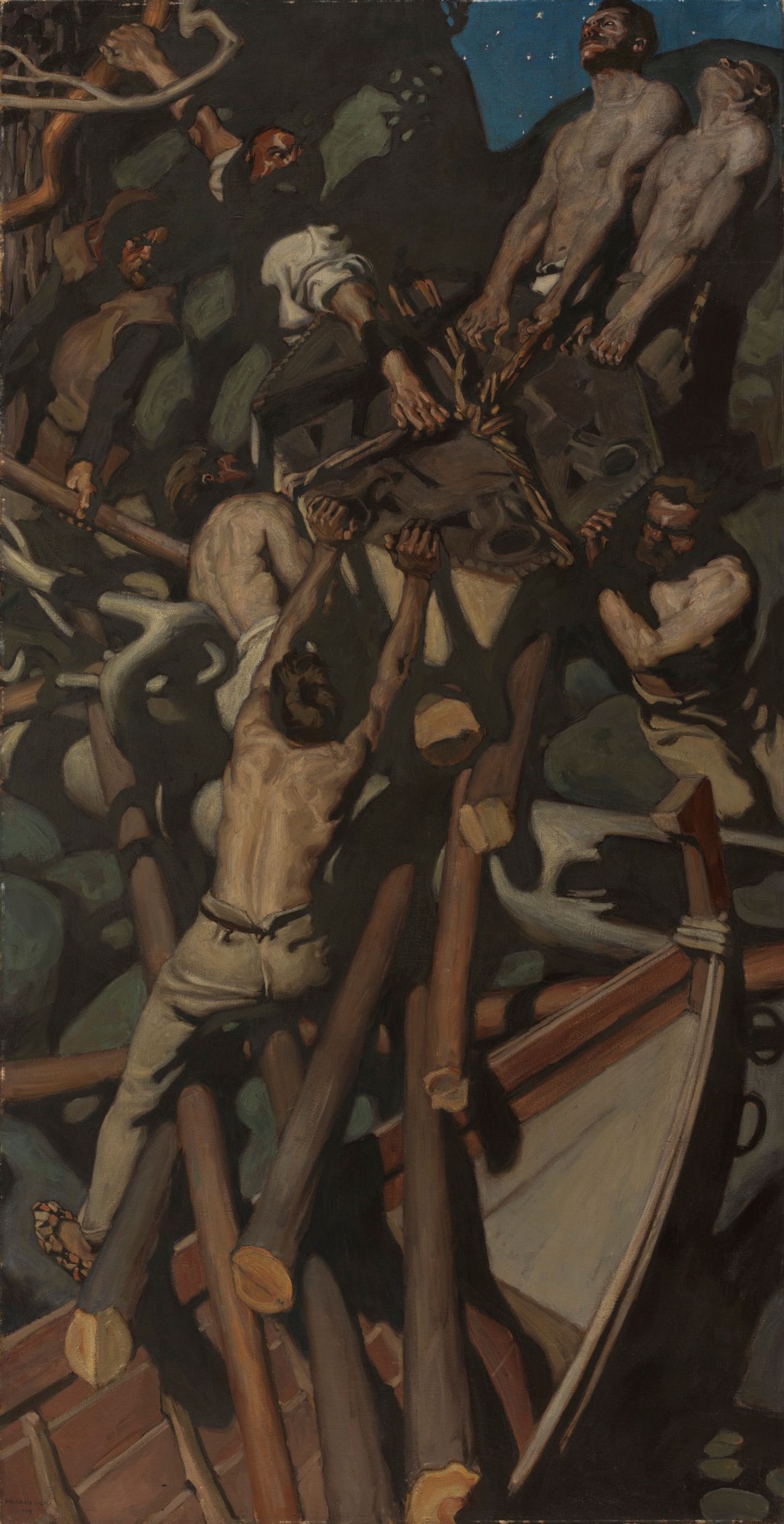
The Sampo is what the mistress of Pohjola asks in return for her daughter (canto 7); Ilmarinen forges it, and she shuts it inside the stone hill of Pohjola (canto 10). Väinämöinen, Ilmarinen and Lemminkäinen sail to take it (canto 39); Väinämöinen plays the people of Pohjola to sleep with his kantele, and the three carry the Sampo off in their boat (canto 42). In the battle at sea the mistress of Pohjola gets it out of their boat into the sea, where it breaks: the larger pieces sink and the smaller ones wash ashore, and Väinämöinen hopes that even these will bring new fortune (canto 43). At the end Väinämöinen departs, foretelling that he will be needed again to make a new Sampo (canto 50).
Written for RunoVerse by the AI model Claude Opus 5.5 from Lönnrot's summaries of the cantos.
In the folk songs
94 songs in the archive collections name the Sampo. Their records place most of them in Viena Karelia, above all in Vuokkiniemi, and the next most in Olonets Karelia (Aunus). They are filed above all as the theft and the forging of the Sampo, the shooting of Väinämöinen and the creation of the world. A few name it only in a set line of a charm or of the singer's opening words.
These lines in Lönnrot's Kalevala
Kalevala, 1849, canto 7, lines 328–332
Folk song: SKVR I1 79, Vuokkiniemi, 1825
Lönnrot's Kalevala of 1849 has lines like these in canto 7; the marked words are in both texts, some in another form. This song was written down in 1825, before Lönnrot published the first Kalevala in 1835.
English under the folk-song lines: translated for RunoVerse by the AI model Claude Fable 5.2. English under the Kalevala lines: W. F. Kirby, 1907.
Compare side by side · Open the song in the poem reader · Read canto 7 with Kirby's English
Lines from the folk songs
One line from the earliest record of known year at each of the ten places with the most songs. The name is marked.
- Päivät sampua takuo, — SKVR I1 63 a), Vuokkiniemi, 1821
- Päivät Samppua takoovi, — SKVR I1 9, Kiimaisjärvi, 1845
- Päivät sampua takoo, — SKVR I1 11, Jyskyjärvi, 1835
- Yöt on sampua takovi, — SKVR I1 105, Uhtua, 1834
- Päivät sampuu takoo, — SKVR I1 30, Kontokki, 1832
- Jo on sampo tästä viety, — SKVR I1 41, Suomussalmi, 1872
- Saatto suuren sammon täy'en, — SKVR VII1 679, Ilomantsi, 1845
- Saipa sampu valmeheksi, — SKVR I1 128, Pistojärvi, 1846
- Hyvän samm⌈o⌉n saatuasi, — SKVR VII1 238, Soanlahti, 1846
- Jott'ei samppu sanoja puutu — SKVR XII2 8003, Kainuu, 1833
Where the archive records place the songs
The places that the archive records give for the songs naming Sampo.
The places with the most songs on the map: Vuokkiniemi, Kiimaisjärvi, Jyskyjärvi, Uhtua, Kontokki, Suomussalmi, Ilomantsi, Pistojärvi.
- 7 or more songs
- 3 to 6 songs
- 1 or 2 songs
- (exact place not known)
All places on the map
7 or more songs
3 to 6 songs
1 or 2 songs
- Ilomantsi
- Pistojärvi
- Soanlahti
- Kainuu (exact place not known)
- Kesälahti
- Kivennapa
- Metsäpirtti
The name as the singers said it
The forms of the name that the collectors wrote down from the singers, each found in at least three songs. Spellings that differ only in writing are joined, and forms with a case ending, such as Sammon, are left out. Under each form: the number of songs, and the region where more than half of them were recorded.
More Kalevala art
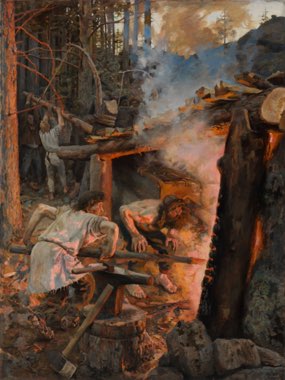
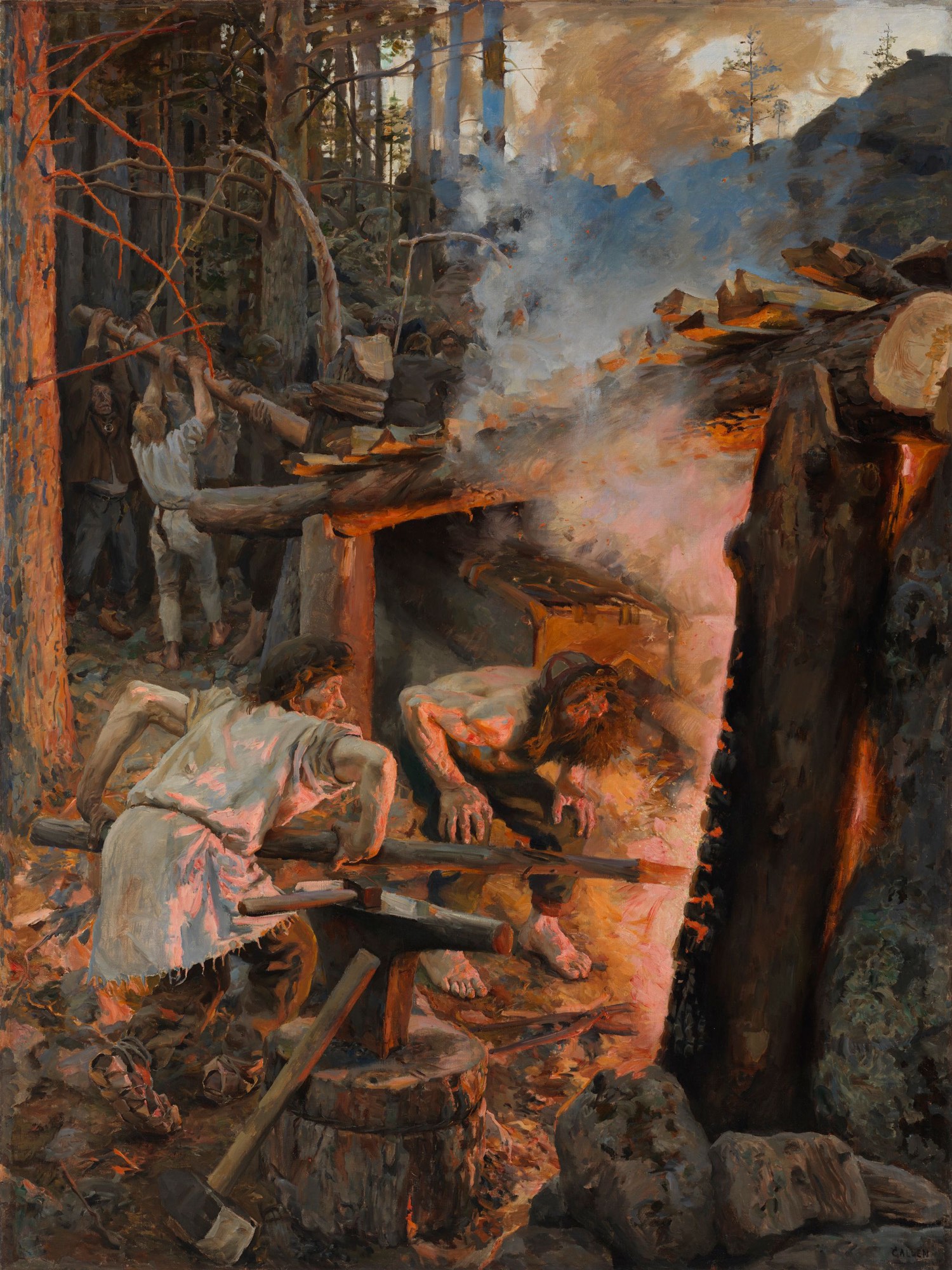
The Forging of the Sampo Canto 10 · Lines 281–432Sammon taonta (The Forging of the Sampo). Akseli Gallen-Kallela, 1893. Read the scene: Ilmarinen forges the Sampo, canto 10, lines 281–432 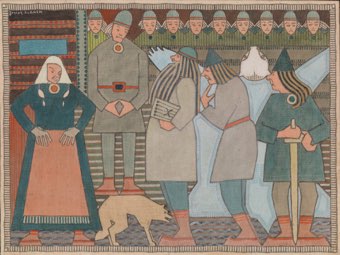
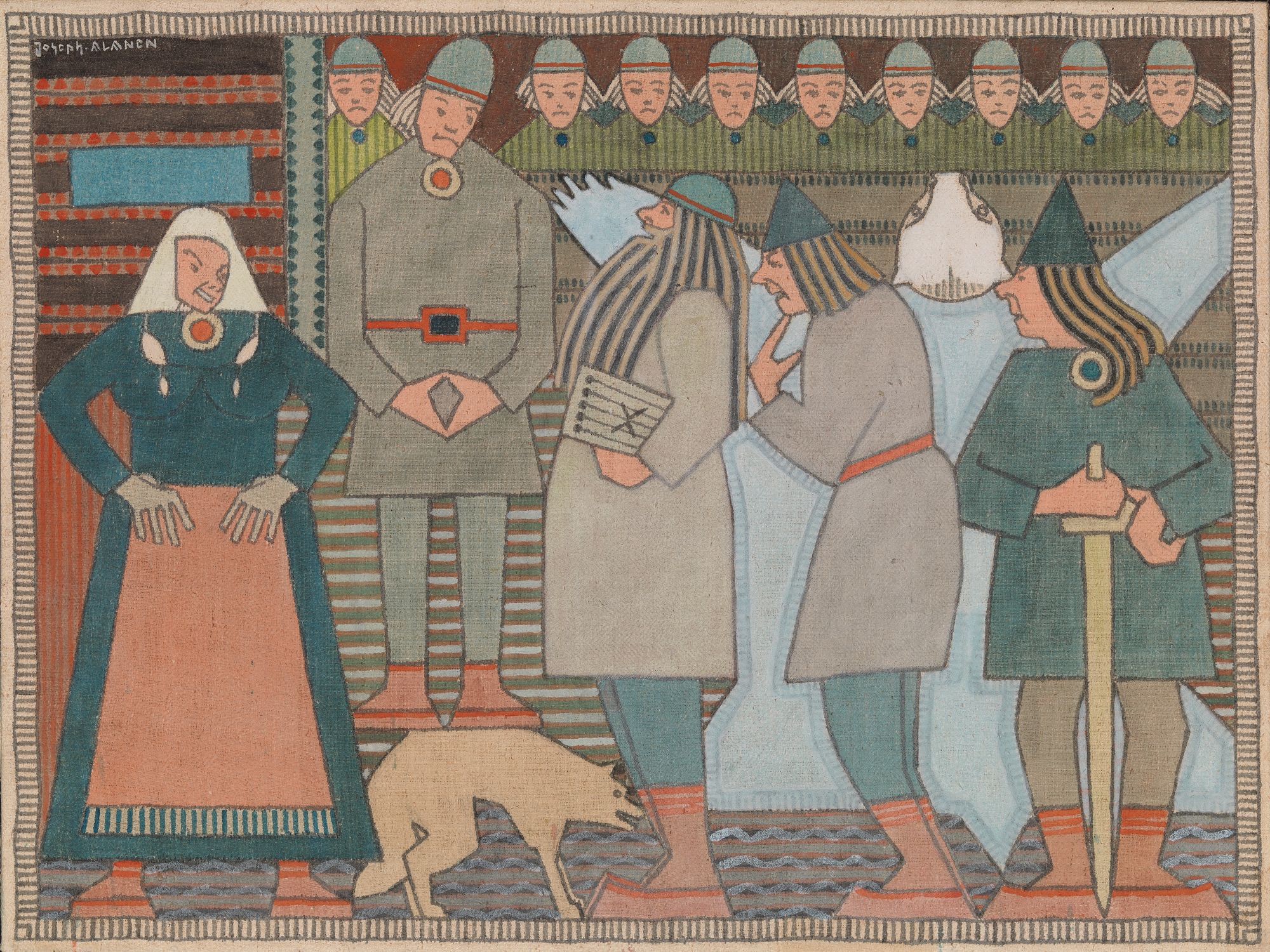
Väinämöinen, Ilmarinen and Lemminkäinen Arrive in Pohjola Canto 42 · Lines 1–58Väinämöisen, Ilmarisen ja Lemminkäisen tulo Pohjolaan (Väinämöinen, Ilmarinen and Lemminkäinen Arrive in Pohjola). Joseph Alanen, undated. Read the scene: The three heroes arrive in Pohjola, canto 42, lines 1–58 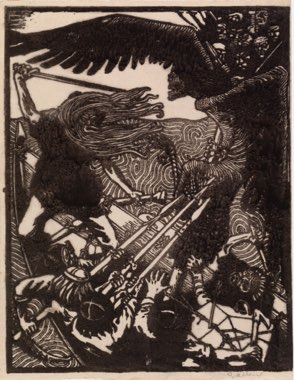
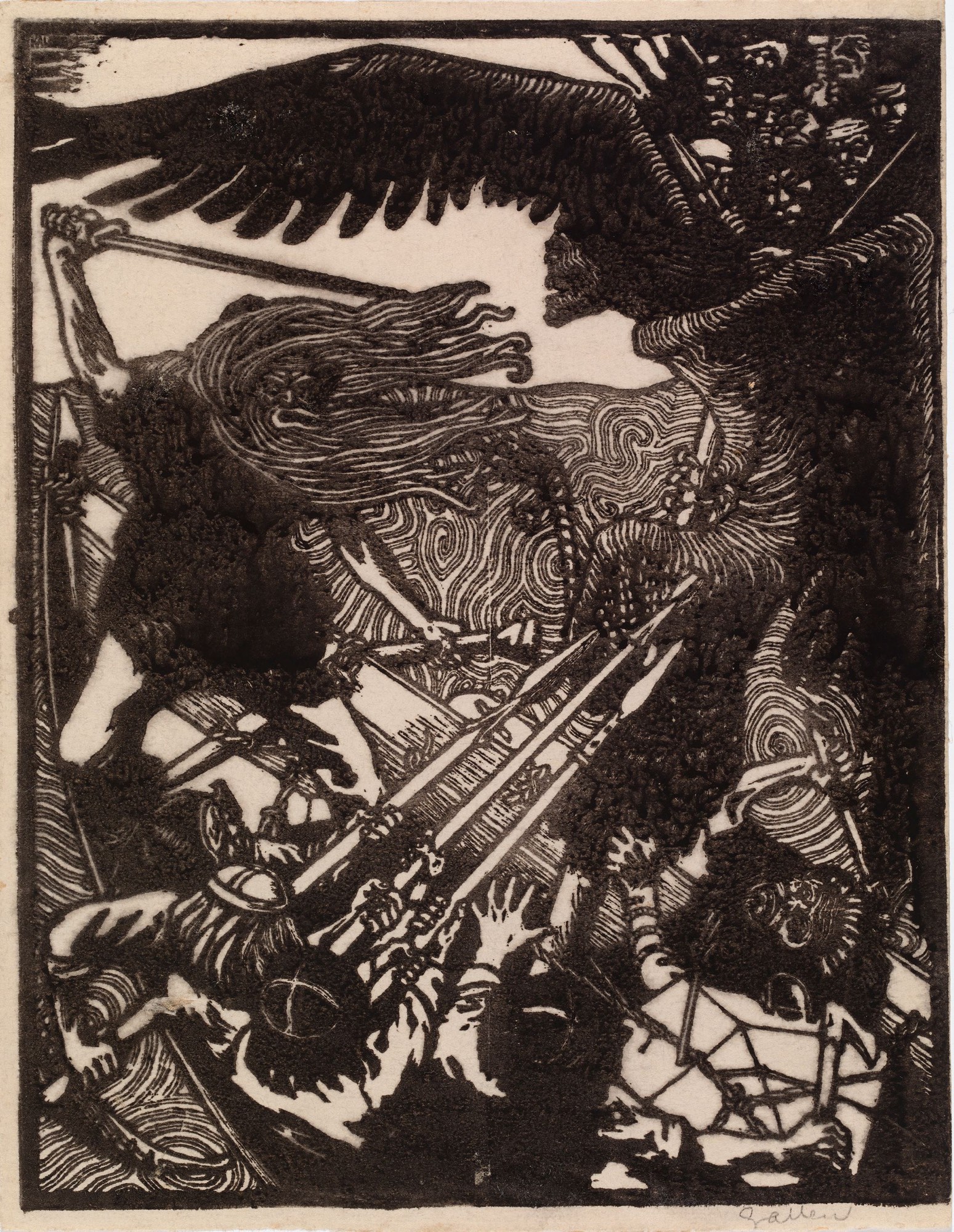
Defence of the Sampo Canto 43 · Lines 23–258Sammon puolustus (Defence of the Sampo). Akseli Gallen-Kallela, 1895. Read the scene: The mistress of Pohjola attacks the raiders of the Sampo at sea, canto 43, lines 23–258
Song types (SKVR and ERAB songs; JR records carry none)
Sammon ryöstö, Sammon taonta, Väinämöisen ammunta, Maailmansyntyruno, Kanteleen soitto, Laivaretki, Kanteleen synty, Vieraalle maalle joutunut, Kilpakosinta, Taivaan taonta, Vipusen virsi, Aukaisen sanaisen arkun
The full list, with the number of songs, is under Counts.
The cantos where Sampo appears
- Canto 7
Väinämöinen swims for several days on the open sea. The eagle, grateful to him for having spared the birch-tree for him to rest on, when he was felling the trees takes Väinämöinen on his wings, and carries him to the borders of Pohjola, where the Mistress of Pohjola takes him to her abode, and receives him hospitably. Väinämöinen desires to return to his own country, and the Mistress of Pohjola permits him to depart, and promises him her daughter in marriage if he will forge the Sampo in Pohjola. Väinämöinen promises that when he returns home he will send the smith Ilmarinen to forge the Sampo, and the Mistress of Pohjola gives him a horse and a sledge to convey him home.
- Canto 10
Väinämöinen reaches home and urges Ilmarinen to depart to woo the Maiden of Pohja, because he would be able to forge a Sampo. Ilmarinen refuses to go to Pohjola, but Väinämöinen conveys him thither without his consent by a stratagem. Ilmarinen arrives in Pohjola, where he is very well received, and promises to forge a Sampo. He forges the Sampo, and the Mistress of Pohjola conceals it in the Rocky Mountain of Pohjola. Ilmarinen asks for the maiden as his reward, but she makes excuses, saying that she is not yet ready to leave home. Ilmarinen receives a boat, returns home, and informs Väinämöinen that he has forged the Sampo in Pohjola.
- Canto 15
One day blood begins to trickle from the hair-brush at Lemminkainen's home, and his mother at once perceives that death has overtaken her son. She hastens to Pohjola and inquires of Louhi what has become of him. The Mistress of Pohjola at length tells her on what errand she has sent him, and the sun gives her full information of the manner of Lemminkainen's death. Lemminkainen's mother goes with a long rake in her hand under the cataract of Tuoni, and rakes the water till she has found all the fragments of her son's body, which she joins together, and succeeds in restoring Lemminkainen to life by charms and magic salves. Lemminkainen then relates how he perished in the river of Tuonela, and returns home with his mother.
- Canto 18
Väinämöinen sets sail in his new boat to woo the Maiden of Pohja. Ilmarinen's sister sees him, calls to him from the shore, learns the object of his journey, and hastens to warn her brother that a rival has set forth to Pohjola to claim the bride. Ilmarinen makes ready, and rides on horseback to Pohjola along the shore. The Mistress of Pohjola sees the suitors approaching, and advises her daughter to choose Väinämöinen. But the daughter herself prefers Ilmarinen, the forger of the Sampo, and tells Väinämöinen, who is first to arrive, that she will not marry him.
- Canto 19
Ilmarinen arrives at the homestead of Pohjola, woos the daughter of the house, and perilous tasks are assigned to him. Aided by the advice of the Maiden of Pohja he succeeds in performing the tasks successfully. Firstly, he ploughs a field of serpent, secondly, he captures the Bear of Tuoni and the Wolf of Manala, and thirdly, he captures a large and terrible pike in the river of Tuonela. The Mistress of Pohjola promises and betroths her daughter to Ilmarinen. Väinämöinen returns from Pohjola in low spirits, and warns every one against going wooing in company with a younger man.
- Canto 38
Ilmarinen goes to Pohjola to woo the younger sister of his first wife, but as he receives only insulting words in reply, he becomes angry, seizes the maiden, and starts on his homeward journey. On the way the maiden treats Ilmarinen with contempt, and provokes him till he changes her into a seagull. When Ilmarinen comes home, he relates to Väinämöinen how the inhabitants of Pohjola live free from care since they possessed the Sampo; and also tells him how badly his wooing has prospered.
- Canto 39
Väinämöinen persuades Ilmarinen to go with him to Pohjola to bring away the Sampo. Ilmarinen consents, and the heroes start off on their journey in a boat. Lemminkainen hails them from the shore, and on hearing where they are going, proposes to join them, and is accepted as a third comrade.
- Canto 42
The heroes arrive at Pohjola, and Väinämöinen announces that he has come to take possession of the Sampo, either with good-will, or by force. The Mistress of Pohjola refuses to yield it either by consent or by compulsion, and calls together her people to oppose him. Väinämöinen takes the kantele, begins to play, and lulls to sleep all the people of Pohjola, and goes with his companions to search for the Sampo; they take it from the stone mountain and convey it to the boat. They sail homewards well satisfied, carrying the Sampo with them. On the third day the Mistress of Pohjola wakes from her sleep, and when she finds that the Sampo has been carried off, she prepares a thick fog, a strong wind, and other impediments, to oppose the robbers of the Sampo, which reach the vessel, and during the tempest Väinämöinen's kantele falls into the water.
- Canto 43
The Mistress of Pohjola equips a war-vessel and goes in pursuit of the robbers of the Sampo. When she overtakes them a fight ensues between the forces of Pohjola and Kalevala in which the latter conquer. Nevertheless the Mistress of Pohjola succeeds in dragging the Sampo from the boat into the lake, where it breaks to pieces. The larger portions sink in the lake, and form its riches, while the smaller pieces are thrown on shore by the waves, at which Väinämöinen is much pleased. The Mistress of Pohjola threatens to send all evil upon Kalevala, to which Väinämöinen pays no attention. The Mistress of Pohjola returns home in great distress, taking with her only a small fragment of the cover of the Sampo. Väinämöinen carefully collects the fragments of the Sampo on the shore, and plants them, hoping for continuous good fortune.
- Canto 45
The Mistress of Pohjola sends terrible diseases to Kalevala. Väinämöinen heals the people by powerful incantations and unguents.
- Canto 50
The virgin Marjatta swallows a cranberry and brings forth a boy. The child disappears and is found after a long search in a swamp. He is taken to an old man to be baptized, but the latter will not baptize the fatherless child until after due consideration. Väinämöinen comes to inquire into the matter, and advises that the ill-omened boy should be put to death, but the child reproaches him for his unjust sentence. The old man baptizes the boy as King of Carelia, at which Väinämöinen is grievously offended and leaves the country, but first declares that he will again make a new Sampo and kantele, and light for the people. He sails away in a copper boat to a land between earth and heaven, but he leaves behind his kantele and his great songs as a parting gift to his people. Concluding verses.
Summaries: W. F. Kirby, 1907, from Lönnrot's summaries in the 1849 edition.
Counts
Songs naming Sampo: 94.
By collection: SKVR 82; JR 12.
Regions, with the number of songs (a region counts every song from any of its places once): Viena 71, Aunus 10, Kainuu 4, Pohjois-Karjala 3, Etelä-Karjala 2, Laatokan Karjala (Raja-Karjala) 2.
Places on the map, with the number of songs (a song given two places counts at both): Vuokkiniemi 51, Kiimaisjärvi 10, Jyskyjärvi 7, Uhtua 6, Kontokki 5, Suomussalmi 3, Ilomantsi 2, Pistojärvi 2, Soanlahti 2, Kainuu 1, Kesälahti 1, Kivennapa 1, Metsäpirtti 1.
Songs whose record gives no place that can be put on the map: 2.
The ten places with the most songs account for 89 of the 92 songs that have a place on the map (97%).
SKVR and ERAB songs without a song type: 0 of 82 (0%).
Song types, with the number of songs: Sammon ryöstö 59, Sammon taonta 53, Väinämöisen ammunta 39, Maailmansyntyruno 30, Kanteleen soitto 21, Laivaretki 21, Kanteleen synty 19, Vieraalle maalle joutunut 18, Kilpakosinta 16, Taivaan taonta 16, Vipusen virsi 7, Aukaisen sanaisen arkun 6, Polin puulle pyörivälle 6, Ihmehevonen 5, Purren itku 5, Veneenveisto 5, Ennen metsä puita puuttuu 4, Kilpalaulanta 4, Kultaneito 4, Lemminkäisen virsi 3, Tuonelassa käynti 3, Ylösnousemusvirsi 3, Joka puu puree, joka sammakko sanoo 2, Kalevanpojan kosto 2, Kyynelten vierintä 2, Oikein on otavat tehty 2, Omat on virret oppimani 2, Parempi on omalla maalla ropehesta vettä juoda 2, Polvenhaava 2, Rutsa 2, Ei ole suojoa sijoa eikä tyyntä valkamoa 1, Eläimet sanansaattajina 1, Erilaisia parannusloitsuja 1, Haittan' on hako vesillä, köyhät eellä rikkahalla 1, Iivana Kojosenpoika 1, Karhua vastaan 1, Karjaa laitumelle laskettaessa 1, Kerskaukset ja varaukset 1, Koskea laskiessa 1, Laula, laula, kieli keito 1, Laulajan alkusanoja 1, Lauloi ennen Lappalainen 1, Luonnon nostatus 1, Metsälle lähtiessä 1, Miehen kolme pahaa 1, Miten ollen, kuin elänen 1, Onnimanni 1, Oravan metsästys 1, Päivän päästö 1, Rikkaan raha kuluu, köyhän raiskan pää menee 1, Saaren neidot 1, Sijan tiedän, missä synnyin 1, Suka mereen 1, Toisin ennen tuulet tuuli 1, Vellamon neidon onginta 1, Väinämöisen tuomio 1.
Spellings of the name, with the number of songs: sammon 45, sampo 33, sampuo 21, sampon 11, sampu 11, sampua 10, samppo 8, sammo 6, sampoa 4, samppu 4, sampoja 3, samppuja 3, samppuo 3, sambuo 2, sampahan 2, sampohose 2, samppuvo 2, sampuja 2, sampusen 2, sampuu 2, sambo 1, sammoh 1, sammoin 1, sammolla 1, sammonkeula 1, sammonkeulasta 1, sammossasa 1, sammot 1, samopo 1, samp 1, sampoansa 1, sampohos 1, samponne 1, sampoo 1, samppua 1, sampun 1, sampuvo 1, sämpyö 1.
Not counted: texts an editor reworked or put together, lines quoted in early scholars' books and papers, texts from early anthologies, poems the archive's editors doubted were folk poetry, composed poems, and texts learned from the Kalevala or other print: JR 00458, JR 03371, JR 31642, JR 47299, JR 50502, JR 66679, JR 66699, JR 66701, JR 81582, JR 83935, JR 84316, JR 85509, JR 85577.
Not counted a second time: 30 texts that copy a record held elsewhere in the collections (fair copies, copies among another collector's papers, excerpts printed separately).
About this page
A song counts on this page when it names Sampo, in any spelling. A song counts once, however often the name occurs in it. The numbers say how many songs name the figure, not how many songs are about it.
The songs are the folk songs in RunoVerse from the SKVR and JR collections of the Finnish Literature Society and from the Estonian Folklore Archives (ERAB). Literary texts are left out: Lönnrot's Kalevala and its earlier versions, the Kanteletar and the other works of the KR corpus. So are songs that the archive files as learned from the Kalevala, and texts that turned out on reading to be an editor's reworking or compilation, lines quoted in early scholars' books and papers, texts from early anthologies, poems the archive's editors doubted were folk poetry, composed poems or texts learned from print, or to follow the printed Kalevala line by line; they are listed under Counts. An early print that is the only surviving record of a song is counted, and so are songs in which the archive's editors saw only some influence of print. When the collections hold one record twice, as a fair copy, as a copy among another collector's papers or as an excerpt printed separately, it counts once.
Each spelling of the name was sorted. Spellings that can only be the name count as they stand. Spellings that are also ordinary words or other names (aino 'only', for instance, or Ahti, also the name of a water god) were decided line by line, each line read in its song. The sorting and the line decisions were made by the AI model Claude Opus 5.5.
The places are those the archive records give: usually the place where the song was written down, for some songs the singer's home parish. A dashed circle marks a region named without a more exact place. A song given two places counts at both.
The cantos are those of Lönnrot's Kalevala of 1849 in which the figure is named. Under each canto is W. F. Kirby's summary of 1907.