The Kalevala: the fifty cantos beside the folk songs
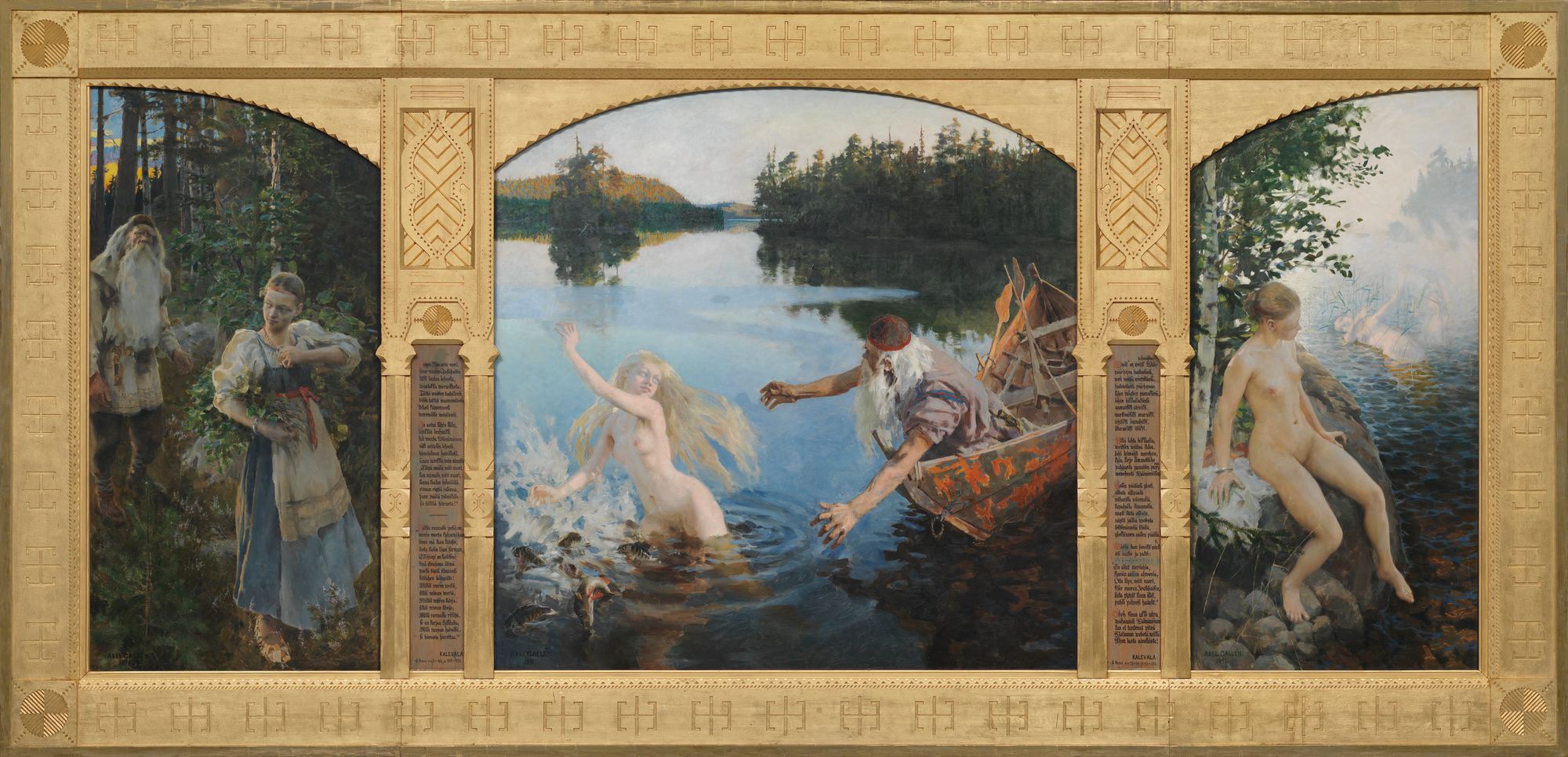
Elias Lönnrot compiled his Kalevala (1835, 1849) from collected song lines, which he combined and reworked. The songs he drew on belong to the Finnic song tradition called runosong in English, runolaulu in Finnish and regilaul in Estonian.
Below are the fifty cantos of the 1849 edition. Each has a page of its own with the Finnish text beside W. F. Kirby's English translation of 1907. Under each passage the page lists the folk songs that share lines with it, and its map shows where the folk songs most similar to the canto were written down.
Each line number opens the line in RunoVerse's reader, which shows, for almost every line, the most similar lines in the folk songs of the archives.
Kalevala characters
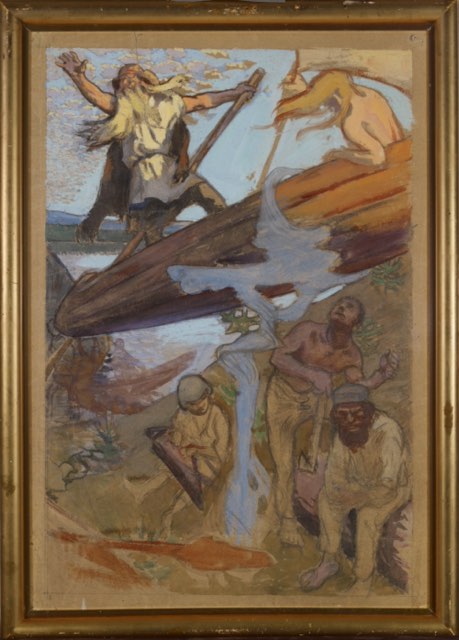 VäinämöinenBorn of the mother of the water, he sings Joukahainen into a bog, woos the maiden of Pohjola in vain, leads the taking of the Sampo and departs at the end in a copper boat.
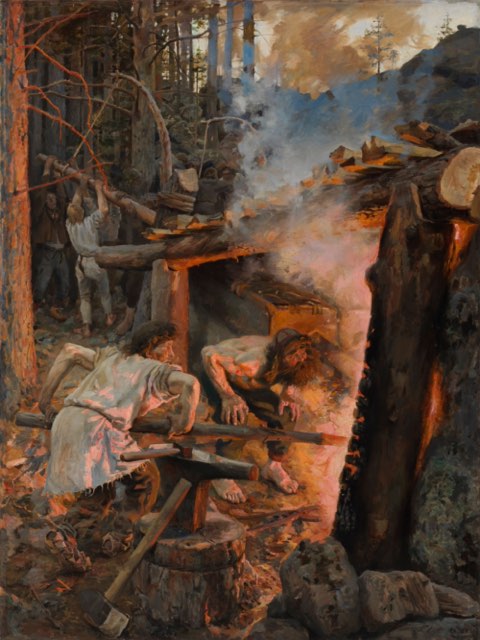 IlmarinenThe smith who forges the Sampo and wins the maiden of Pohjola; when Kullervo's beasts kill her, he forges himself a bride of gold.
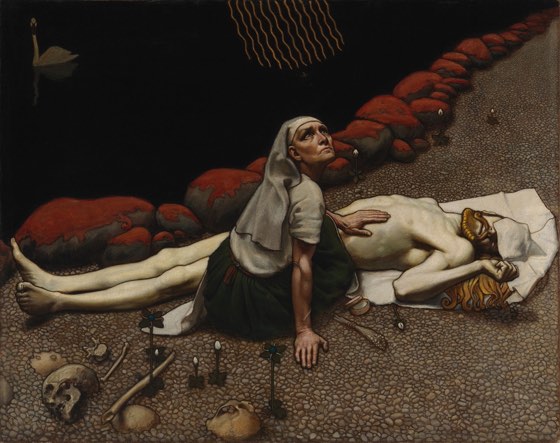 LemminkäinenCarries off Kyllikki, is killed at the river of Tuonela and brought back to life by his mother, kills the master of Pohjola and sails with the others for the Sampo.
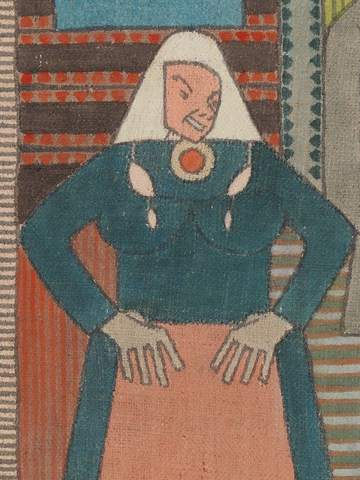 LouhiThe mistress of Pohjola: she asks for the Sampo in return for her daughter, pursues its raiders and hides the moon and the sun.
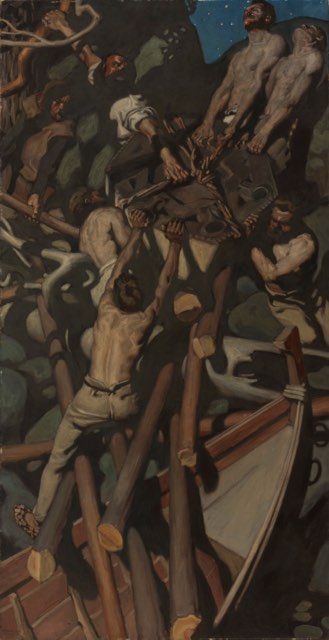 SampoIlmarinen forges it as the price of the maiden of Pohjola; taken from Pohjola, it breaks in the battle at sea.
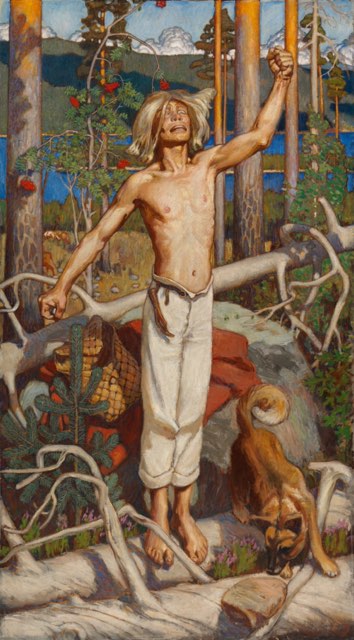 KullervoBorn in captivity at Untamola, sold as a slave to Ilmarinen; he takes revenge on his mistress and on Untamo, and ends his own life.
Cantos 1–50
- Canto 1 Mieleni minun tekevi
The Virgin of the Air descends into the sea, where she is fertilized by the winds and waves and becomes the Water-Mother.
Figures: Väinämöinen
- Canto 2 Nousi siitä Väinämöinen
Väinämöinen lands on a treeless country and directs Sampsa Pellervoinen to sow trees.
Figures: Väinämöinen
- Canto 3 Vaka vanha Väinämöinen
Väinämöinen increases in wisdom and composes songs.
Figures: Väinämöinen
- Canto 4 Tuopa Aino, neito nuori
Väinämöinen meets Aino in the wood and addresses her.
Figures: Väinämöinen
- Canto 5 Jo oli sanoma saatu
Väinämöinen fishes for Joukahainen's sister in the lake, and draws her into his boat in the form of a fish.
Figures: Väinämöinen
- Canto 6 Vaka vanha Väinämöinen
Joukahainen cherishes hatred against Väinämöinen and lies in wait for him on his journey to Pohjola.
Figures: Väinämöinen
- Canto 7 Vaka vanha Väinämöinen
Väinämöinen swims for several days on the open sea.
Figures: Väinämöinen, Ilmarinen, Louhi, Sampo
- Canto 8 Tuo oli kaunis Pohjan neiti
On his journey Väinämöinen encounters the magnificently-clad Maiden of Pohja, and makes advances to her.
Figures: Väinämöinen
- Canto 9 Siitä vanha Väinämöinen
Väinämöinen repeats to the old man the legend of the origin of iron.
Figures: Väinämöinen, Ilmarinen
- Canto 10 Vaka vanha Väinämöinen
Väinämöinen reaches home and urges Ilmarinen to depart to woo the Maiden of Pohja, because he would be able to forge a Sampo.
Figures: Väinämöinen, Ilmarinen, Louhi, Sampo
- Canto 11 Aika on Ahtia sanoa
Lemminkainen goes to seek a wife among the noble maidens of Saari.
Figures: Lemminkäinen
- Canto 12 Siitä Ahti Lemminkäinen
Kyllikki forgets her oath and goes to the village, whereupon Lemminkainen is enraged and resolves to divorce her immediately, and to set forth to woo the Maiden of Pohja.
Figures: Lemminkäinen, Louhi
- Canto 13 Siitä lieto Lemminkäinen
Lemminkainen asks the old woman of Pohja for her daughter, but she demands that he should first capture the Elk of Hiisi on snowshoes.
Figures: Lemminkäinen, Louhi
- Canto 14 Siitä lieto Lemminkäinen
Lemminkainen invokes the forest deities, and at length succeeds in capturing the elk, and brings it to Pohjola.
Figures: Lemminkäinen, Louhi
- Canto 15 Äiti lieto Lemminkäisen
One day blood begins to trickle from the hair-brush at Lemminkainen's home, and his mother at once perceives that death has overtaken her son.
Figures: Ilmarinen, Lemminkäinen, Louhi, Sampo
- Canto 16 Vaka vanha Väinämöinen
Väinämöinen orders Sampsa Pellervoinen to seek for wood for boat-building.
Figures: Väinämöinen
- Canto 17 Vaka vanha Väinämöinen
Väinämöinen goes to obtain magic words from Antero Vipunen, and wakes him from his long sleep under the earth.
Figures: Väinämöinen, Ilmarinen
- Canto 18 Vaka vanha Väinämöinen
Väinämöinen sets sail in his new boat to woo the Maiden of Pohja.
Figures: Väinämöinen, Ilmarinen, Louhi, Sampo
- Canto 19 Siitä seppo Ilmarinen
Ilmarinen arrives at the homestead of Pohjola, woos the daughter of the house, and perilous tasks are assigned to him.
Figures: Väinämöinen, Ilmarinen, Louhi, Sampo
- Canto 20 Mitä nyt laulamme lajia
An enormous ox is slaughtered in Pohjola.
Figures: Väinämöinen, Lemminkäinen, Louhi
- Canto 21 Tuop' on Pohjolan emäntä
The bridegroom and his party are received at Pohjola.
Figures: Väinämöinen, Louhi
- Canto 22 Kun oli kyllin häitä juotu
The bride is prepared for her journey and is reminded of her past life and of the altered life that now lies before her.
- Canto 23 Nyt on neiti neuvominen
The bride is instructed and directed how to conduct herself in her husband's house.
- Canto 24 Jo nyt on neiti neuvottuna
The bridegroom is instructed how he should behave towards his bride, and is cautioned not to treat her badly.
Figures: Ilmarinen
- Canto 25 Jopa viikon vuoteltihin
The bride, the bridegroom and their company are received at the home of Ilmarinen.
Figures: Väinämöinen, Ilmarinen
- Canto 26 Ahti oli saarella asuva
Lemminkainen, greatly offended that he was not invited to the wedding, resolves to go to Pohjola, although his mother dissuades him from it, and warns him of the many dangers that he will have to encounter.
Figures: Lemminkäinen
- Canto 27 Jo nyt Kaukoni kuletin
Lemminkainen comes to Pohjola and behaves with the greatest insolence.
Figures: Lemminkäinen, Louhi
- Canto 28 Jo nyt Ahti Saarelainen
Lemminkainen escapes with all speed from Pohjola, comes home and asks his mother where he can hide himself from the people of Pohjola, who will soon attack him in his home, a hundred to one.
Figures: Lemminkäinen
- Canto 29 Lemminkäinen, lieto poika
Lemminkainen sails across the lakes in his boat and comes safely to the island.
Figures: Lemminkäinen
- Canto 30 Ahti poika, aino poika
Lemminkainen goes to ask his former comrade-in-arms, Tiera, to join him in an expedition against Pohjola.
Figures: Ilmarinen, Lemminkäinen, Louhi
- Canto 31 Kasvatti emo kanoja
Untamo wages war against his brother Kalervo, overthrows Kalervo and his army, sparing only a single pregnant woman of the whole clan.
Figures: Ilmarinen
- Canto 32 Kullervo, Kalervon poika
The wife of Ilmarinen makes Kullervo her herdsman and maliciously bakes him a stone in his lunch.
Figures: Ilmarinen
- Canto 33 Kullervo, Kalervon poika
While Kullervo is in the pasture in the afternoon he tries to cut the cake with his knife which he completely spoils, and this goes to his heart the more because the knife was the only remembrance left to him of his family.
Figures: Ilmarinen
- Canto 34 Kullervo, Kalervon poika
Kullervo escapes from the homestead of Ilmarinen, and wanders sorrowfully through the forest, where he meets with the Old Woman of the Forest, who informs him that his father, mother, brothers and sisters are still living.
Figures: Ilmarinen
- Canto 35 Kullervo, Kalervon poika
Kullervo attempts to do different kinds of work for his parents, but only succeeds in spoiling everything, so his father sends him to pay the land-dues.
- Canto 36 Kullervo, Kalervon poika
Kullervo prepares for war and leaves home joyfully, for no one but his mother is sorry that he is going to his death.
Figures: Väinämöinen
- Canto 37 Se on seppo Ilmarinen
Ilmarinen weeps long for his dead wife and then forges himself a wife of gold and silver with great labour and trouble.
Figures: Väinämöinen, Ilmarinen
- Canto 38 Tuop' on seppo Ilmarinen
Ilmarinen goes to Pohjola to woo the younger sister of his first wife, but as he receives only insulting words in reply, he becomes angry, seizes the maiden, and starts on his homeward journey.
Figures: Väinämöinen, Ilmarinen, Louhi, Sampo
- Canto 39 Vaka vanha Väinämöinen
Väinämöinen persuades Ilmarinen to go with him to Pohjola to bring away the Sampo.
Figures: Väinämöinen, Ilmarinen, Lemminkäinen, Sampo
- Canto 40 Vaka vanha Väinämöinen
The Sampo-raiders come to a waterfall, beneath which the boat is caught fast on the back of a great pike.
Figures: Väinämöinen, Ilmarinen, Lemminkäinen
- Canto 41 Vaka vanha Väinämöinen
Väinämöinen plays on the kantele, and all living things, whether belonging to the air, earth, or water, hasten to the spot to listen.
Figures: Väinämöinen
- Canto 42 Vaka vanha Väinämöinen
The heroes arrive at Pohjola, and Väinämöinen announces that he has come to take possession of the Sampo, either with good-will, or by force.
Figures: Väinämöinen, Ilmarinen, Lemminkäinen, Louhi, Sampo
- Canto 43 Louhi, Pohjolan emäntä
The Mistress of Pohjola equips a war-vessel and goes in pursuit of the robbers of the Sampo.
Figures: Väinämöinen, Ilmarinen, Lemminkäinen, Louhi, Sampo
- Canto 44 Vaka vanha Väinämöinen
Väinämöinen goes to seek for his kantele which was lost in the lake, but cannot find it.
Figures: Väinämöinen, Ilmarinen
- Canto 45 Louhi, Pohjolan emäntä
The Mistress of Pohjola sends terrible diseases to Kalevala.
Figures: Väinämöinen, Louhi, Sampo
- Canto 46 Sai sanoma Pohjolahan
The Mistress of Pohjola sends a bear to destroy the herds of Kalevala.
Figures: Väinämöinen, Ilmarinen, Louhi
- Canto 47 Vaka vanha Väinämöinen
The moon and sun descend to listen to Väinämöinen's playing.
Figures: Väinämöinen, Ilmarinen, Louhi
- Canto 48 Vaka vanha Väinämöinen
The heroes prepare a linen net, and at length capture the fish which has swallowed the fire.
Figures: Väinämöinen, Ilmarinen
- Canto 49 Ain' on päivä paistamatta
Ilmarinen forges a new moon and sun but cannot make them shine.
Figures: Väinämöinen, Ilmarinen, Lemminkäinen, Louhi
- Canto 50 Marjatta, korea kuopus
The virgin Marjatta swallows a cranberry and brings forth a boy.
Figures: Väinämöinen, Sampo
Summary sentences: W. F. Kirby, 1907, from Lönnrot's summaries in the 1849 edition.
More in RunoVerse
- Kullervo's story, cantos 31–36
- Kullervo in the Old Kalevala of 1835 (canto 19)
- Places in the Kalevala: a map of the real places the cantos name
- The Old Kalevala of 1835 in the reader
- The reader's list of literary epics: the Old Kalevala with its variants, Lönnrot's manuscripts of 1833–1834, Kreutzwald's Kalevipoeg and others
- What is a runosong (runolaulu, regilaul)?
About these folk songs
On the canto pages, a folk song is listed under a passage when several lines of the passage can each be paired with a line of the song; each page gives the full rule. In the reader, each line of every canto opens the lines most like it, found by RunoVerse's verse-similarity measures; besides the folk songs, these lists hold lines of printed texts such as the Old Kalevala and the Kanteletar.
The songs were written down at different times, some before the 1849 Kalevala appeared and some after it, when singers could have learned from the book; the canto pages give the year each song was written down.
A shared line does not show that Lönnrot knew or used the song: the same lines were sung by many singers in many places. For evidence of which songs Lönnrot used, see the commentary in Avoin Kalevala, the Finnish Literature Society's online edition (in Finnish), linked from each canto page. The closest matches of each line are in the poem reader, and Runoregi, the FILTER project's research tool, also shows similar lines line by line.